
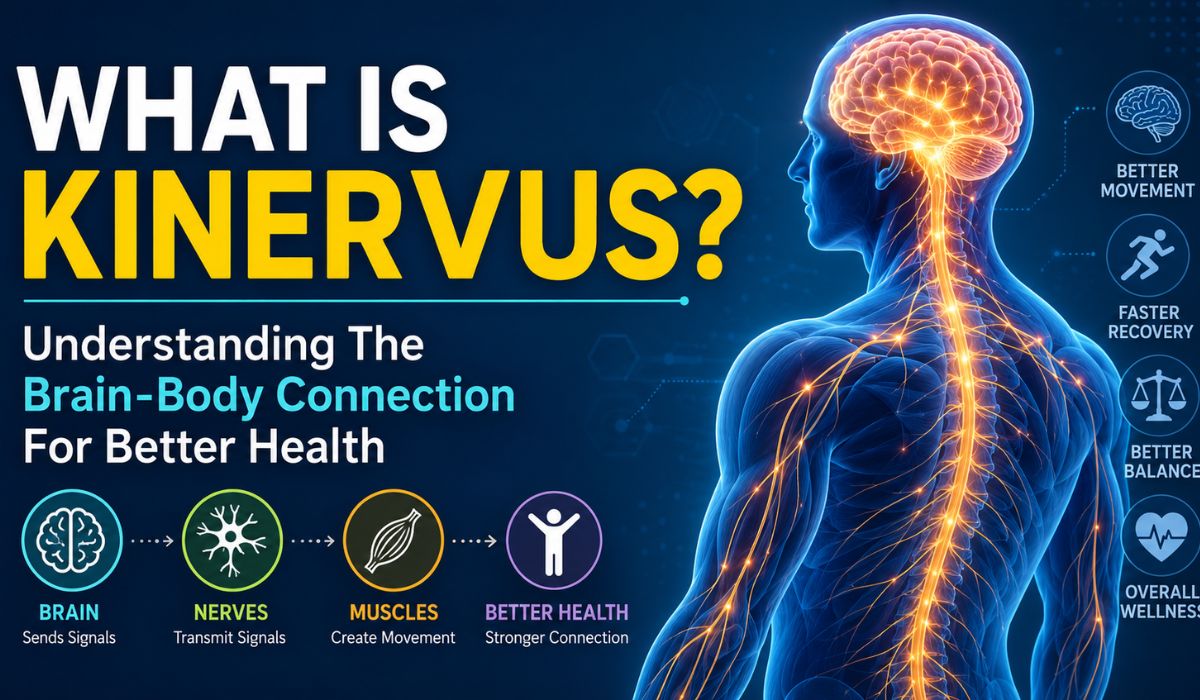
Kinervus is a term that is gaining attention in discussions about movement, rehabilitation, wellness, and human performance. At its core, Kinervus focuses on the connection between the brain, nerves, and muscles and how these systems work together to control everything we do. From taking a simple step to performing complex athletic movements, every action depends on communication between the nervous system and the body.
While the word Kinervus is not widely recognized as an established scientific term, it represents several well-supported concepts from neuroscience, neuroplasticity, motor learning, and neuromuscular coordination. Understanding these ideas can help people improve movement, recover from injuries, maintain independence as they age, and develop a greater appreciation for how the human body functions. As research into the Brain-Body Connection continues to grow in 2026, the principles associated with Kinervus remain highly relevant for health and recovery.
Quick Bio About Kinervus
| Fact | Information |
|---|---|
| Primary Focus | Brain-Body Communication |
| Main Systems Involved | Brain, Nerves, Muscles |
| Related Field | Neuroscience |
| Movement Control | Central Concept |
| Neuroplasticity | Key Principle |
| Rehabilitation Use | Common Application |
| Athletic Training | Frequently Applied |
| Balance Improvement | Important Benefit |
| Coordination Development | Major Goal |
| Body Awareness | Core Component |
| Nervous System Health | Central Focus |
| Motor Learning | Strong Connection |
| Healthy Aging | Valuable Application |
| Injury Recovery | Often Supported |
| Fall Prevention | Potential Benefit |
| Stress Management | Indirect Benefit |
| Physical Performance | Enhanced Through Training |
| Wellness Relevance | Growing Interest |
| Scientific Foundation | Neuromuscular Science |
| Long-Term Goal | Better Function And Independence |
What Is Kinervus?
Kinervus combines the ideas of movement and neural communication. The concept highlights the relationship between the Brain, Nervous System, and Muscles. Rather than viewing movement as a purely physical activity, Kinervus emphasizes that every movement begins with signals generated by the brain.
The concept encourages people to think beyond muscle strength alone. Strong muscles are valuable, but they can only function effectively when the nervous system sends accurate and timely instructions. Kinervus therefore focuses on the quality of communication between the brain and body, making it relevant for rehabilitation, sports performance, wellness, and healthy aging.
Why The Brain-Body Connection Matters
The Brain-Body Connection influences nearly every aspect of daily life. Walking, standing, balancing, writing, driving, and even speaking require coordinated communication between different parts of the nervous system. When this communication works efficiently, movements feel smooth and effortless.
Problems arise when signals become disrupted. Injuries, neurological conditions, aging, stress, and inactivity can all affect how well the brain communicates with muscles. Understanding Kinervus helps people recognize that movement quality depends not only on physical fitness but also on nervous system health. This broader perspective can lead to more effective approaches to recovery and long-term wellness.
Understanding How The Nervous System Controls Movement
The nervous system functions as the body’s communication network. The Brain serves as the command center, processing information and creating movement instructions. These instructions travel through the Spinal Cord before reaching Peripheral Nerves, which deliver signals directly to muscles.
At the same time, muscles, joints, and sensory receptors send information back to the brain. This feedback helps the brain understand body position, balance, and movement quality. The process happens continuously, often without conscious awareness. Kinervus highlights this two-way communication and shows why movement should be viewed as an ongoing conversation between the brain and body.
The Science Behind Kinervus And Neural Communication
Neural Communication relies on specialized cells called neurons. These cells transmit electrical and chemical signals throughout the body. Motor Neurons carry commands from the brain to muscles, while Sensory Neurons deliver information back to the brain.
This system allows the body to make rapid adjustments during movement. For example, when walking on uneven ground, sensory feedback instantly informs the brain about changes in surface conditions. The brain then adjusts muscle activity to maintain balance. This remarkable process demonstrates why Neural Pathways are essential for efficient movement and physical performance.
Neuroplasticity And The Brain’s Ability To Adapt
One of the most important concepts related to Kinervus is Neuroplasticity. Neuroplasticity refers to the brain’s ability to create new connections and strengthen existing pathways throughout life. Contrary to old beliefs, the brain is not fixed after childhood. It continues to adapt and change based on experience, learning, and practice.
This ability explains why people can learn new skills, recover from injuries, and improve coordination. Repeated practice strengthens neural pathways, making movements more automatic and efficient. Neuroplasticity forms the foundation of many modern rehabilitation programs and helps explain how targeted training can lead to lasting improvements in physical function.
How Kinervus Supports Rehabilitation And Recovery
Rehabilitation often focuses on rebuilding lost movement and function. Kinervus supports this goal by emphasizing the restoration of communication between the brain and body. After a Stroke, Brain Injury, or Neurological Condition, muscles may still be capable of movement, but neural pathways may be weakened or disrupted.
Through carefully designed exercises and repetitive practice, therapists help patients retrain these pathways. Recovery takes time, but Neuroplasticity allows the brain to adapt and develop alternative routes for communication. This approach has become a central part of modern Neurological Rehabilitation and continues to produce meaningful improvements for many patients.
Kinervus And Athletic Performance
Athletes often focus on strength, endurance, and speed, but neural efficiency is equally important. Kinervus highlights how the Nervous System influences performance by controlling reaction time, coordination, balance, and precision.
Elite athletes train their nervous systems through repetition and skill practice. The goal is not simply to build stronger muscles but to create faster and more accurate communication between the brain and body. Improved Neuromuscular Coordination can lead to better performance while also reducing the likelihood of injury.
The Importance Of Proprioception And Body Awareness
Proprioception is the body’s ability to sense its position and movement without looking. It allows people to walk upstairs, maintain balance, and perform athletic movements with accuracy. This often-overlooked ability plays a major role in the Brain-Body Connection.
Kinervus places significant emphasis on Proprioception because it helps the brain understand where the body is in space. Exercises that improve balance, stability, and coordination can strengthen this awareness. Better Proprioception often leads to improved movement quality, greater confidence, and a reduced risk of falls and injuries.
Factors That Can Weaken The Brain-Body Connection
Several factors can interfere with Neural Communication. Physical Injuries may damage nerves or disrupt movement patterns. Chronic Stress can affect nervous system function and reduce coordination. Poor Sleep limits the brain’s ability to recover and process information effectively.
A Sedentary Lifestyle also contributes to weaker neural pathways. When people move less, the brain receives fewer opportunities to practice and reinforce movement skills. Aging can create additional challenges, although regular activity and mental engagement can help preserve many aspects of nervous system function.
Practical Ways To Strengthen The Brain-Body Connection
Improving the Brain-Body Connection does not require complicated technology or specialized equipment. Regular physical activity remains one of the most effective strategies. Walking, strength training, mobility exercises, and balance work all stimulate Neural Pathways and encourage healthy communication between the brain and muscles.
Mindfulness practices can also help. Activities such as Yoga and Tai Chi encourage greater awareness of body position and movement. Combined with quality sleep, proper nutrition, and consistent exercise, these habits support both physical and neurological health.
Kinervus And Healthy Aging
As people age, maintaining mobility becomes increasingly important. The principles associated with Kinervus can help older adults preserve balance, coordination, and independence. Research continues to show that the brain remains adaptable throughout life, meaning older individuals can still improve movement skills and develop new neural connections.
Regular exercise, social engagement, cognitive stimulation, and movement training all contribute to healthy aging. By strengthening the Brain-Body Connection, older adults can reduce fall risk, maintain confidence, and enjoy a higher quality of life.
Benefits Of Understanding Kinervus Principles
The benefits of Kinervus extend far beyond rehabilitation. Better Neural Communication can improve movement efficiency, increase body awareness, and enhance physical performance. Many people experience improved balance, faster reaction times, and greater confidence in everyday activities.
The concept also encourages a more holistic view of health. Rather than separating the brain and body, Kinervus emphasizes their continuous interaction. This perspective helps individuals make informed decisions about exercise, recovery, stress management, and overall wellness.
Important Considerations
Although the ideas associated with Kinervus are supported by established principles in Neuroscience and Rehabilitation Science, it is important to approach the topic realistically. Recovery outcomes vary between individuals, and no single method guarantees success.
People recovering from serious injuries or neurological conditions should seek guidance from qualified healthcare professionals. Professional assessment and personalized treatment plans remain essential components of effective rehabilitation. Kinervus should be viewed as a framework for understanding movement rather than a standalone medical treatment.
Conclusion
Kinervus offers a useful way to understand the powerful relationship between the Brain, Nervous System, and Muscles. While the term itself may not be a formally established medical concept, the principles behind it are grounded in well-known scientific ideas such as Neuroplasticity, Motor Learning, Proprioception, and Neuromuscular Coordination.
Whether someone is recovering from an injury, training for athletic performance, or simply looking to maintain health as they age, strengthening the Brain-Body Connection can provide meaningful benefits. The growing understanding of how the nervous system influences movement reminds us that health is not just about strong muscles. It is also about creating effective communication between the brain and the body so that every movement becomes more efficient, confident, and purposeful.
FAQs About Kinervus
What Is Kinervus In Simple Terms?
Kinervus is a concept that describes how the Brain, Nerves, and Muscles work together to control movement, recovery, coordination, and overall physical function.
Is Kinervus A Medical Treatment?
No. Kinervus is not a specific medical treatment. It is a concept that reflects scientific principles related to Neural Communication, Neuroplasticity, and Movement Science.
How Does Kinervus Relate To Neuroplasticity?
Neuroplasticity is the brain’s ability to create and strengthen neural connections. Kinervus relies heavily on this idea because improved communication between the brain and body often develops through repeated practice and learning.
Can Kinervus Help With Stroke Recovery?
Many rehabilitation approaches that focus on rebuilding Brain-Body Communication can support Stroke Recovery. These methods use targeted exercises to strengthen neural pathways and improve movement function.
Why Is The Brain-Body Connection Important?
The Brain-Body Connection allows the nervous system to coordinate movement, balance, posture, and physical performance. Strong communication helps the body move more efficiently and safely.
Can Athletes Benefit From Kinervus Principles?
Yes. Athletes often use training methods that improve Neuromuscular Coordination, Reaction Time, Balance, and Movement Efficiency. These principles align closely with the ideas associated with Kinervus.
What Activities Strengthen Neural Communication?
Regular exercise, Balance Training, Strength Training, Walking, Yoga, Tai Chi, and Skill-Based Activities can all help strengthen communication between the Brain and Body.
Is Kinervus Useful For Older Adults?
Yes. Older adults can benefit from activities that improve balance, coordination, and body awareness. Strengthening the Brain-Body Connection may help maintain independence and reduce the risk of falls.
Recommended For You: porb.co.uk